
Education is a core pillar of Fresno Chaffee Zoo’s mission. The Zoo is proud to partner with University of California, San Francisco – Fresno to fulfill that mission.
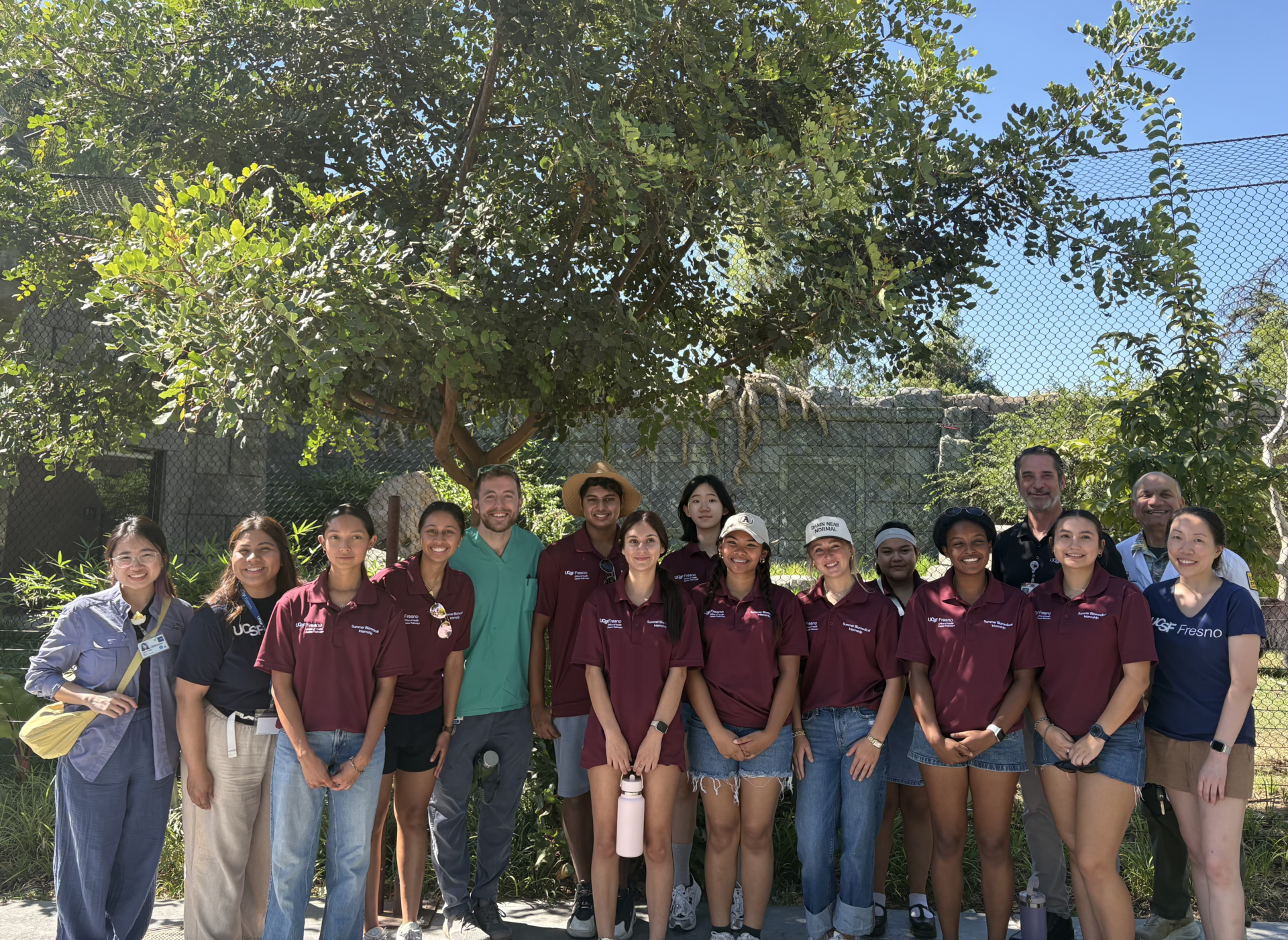
On Wednesday, July 15th, students from UCSF – Fresno’s Summer Biomedical Internship Program came to Fresno Chaffee Zoo to learn about rattlesnake bites, veterinary care, and how the Zoo takes precautions when working with venomous and poisonous animals.
UCSF – Fresno’s Summer Biomedical Internship Program is designed to provide aspirational high school students across the Central Valley with real-world medical experience, introducing them to a possible career in healthcare. 10 students from across the region are selected to participate in the six-week program, which consists of lectures, a hands-on clinical workshop, and a trip to Fresno Chaffee Zoo.
“These are a very special group of students,” said Dr. Rais Vohra, Professor of Clinical Pharmacy and Emergency Medicine at UCSF – Fresno. “They’re very interested in healthcare careers, and they’re doing a lot of different shadowing experiences with doctors and healthcare professionals, and they’re doing medical research. Today is the only day that they’re going to get a taste of veterinary medicine, herpetology, and zoology, so it’s a very special experience for them.”
Students started their day by meeting with Mark Halvorsen, Fresno Chaffee Zoo’s Curator of Birds, Herptiles, and Macropods, who explained a few of the Zoo’s precautions when dealing with these animals. Halvorsen showed the students the types of antivenoms that the Zoo carries and how it is stored to ensure that the Zoo is following all protocols from both the Association of Zoos and Aquariums and the California Poison Control System.
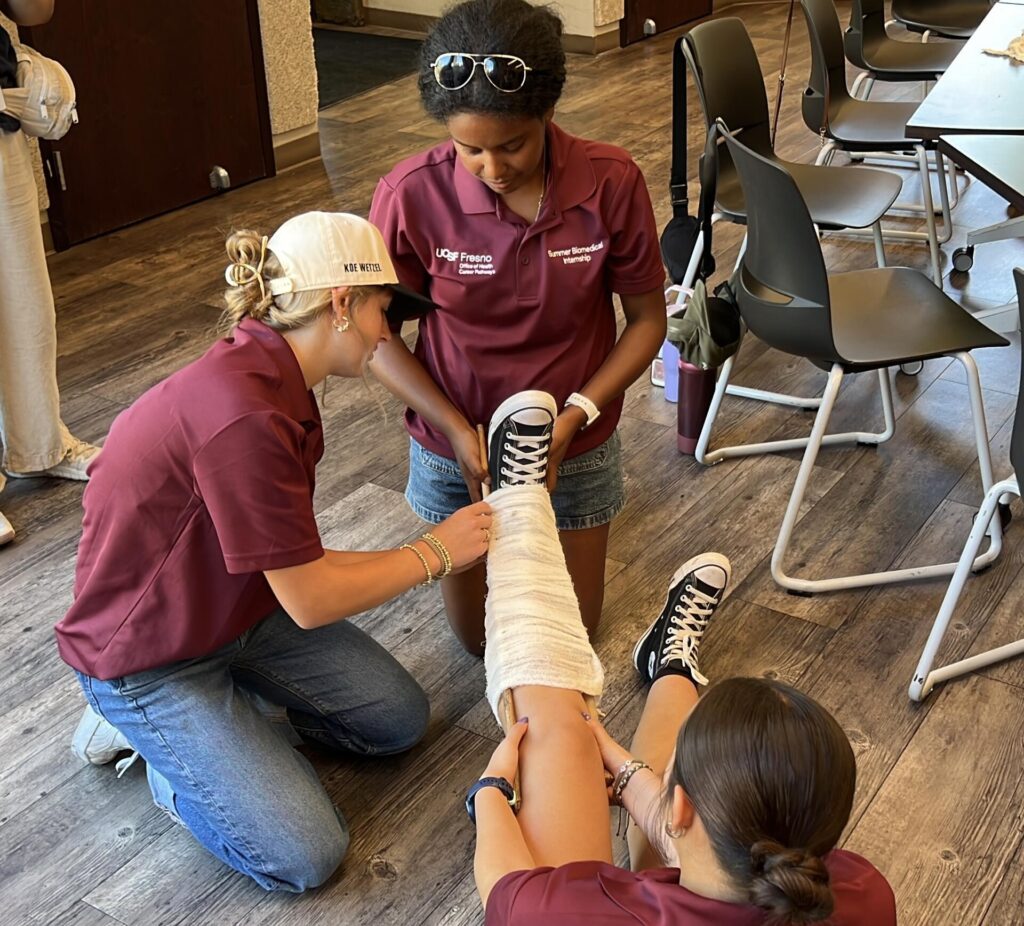
Next, Dr. Vohra, walked the students through a demonstration on how to splint rattlesnake bites. Students first learned by watching, then were able to get practical hands-on experience by splinting their fellow classmates.
While these students are training to potentially go into the healthcare field, this knowledge remains relevant even if they decide on another career path. Students acted out scenarios that could happen in their everyday lives, like getting bitten by a rattlesnake while hiking on a trail with friends. Dr. Vohra also demonstrated another common medical emergency— an allergic reaction. Students practiced administering an EpiPen to their classmates in the event of this kind of emergency. So, while these students are practicing for their future careers, they are also gaining life skills that can help them in personal scenarios.
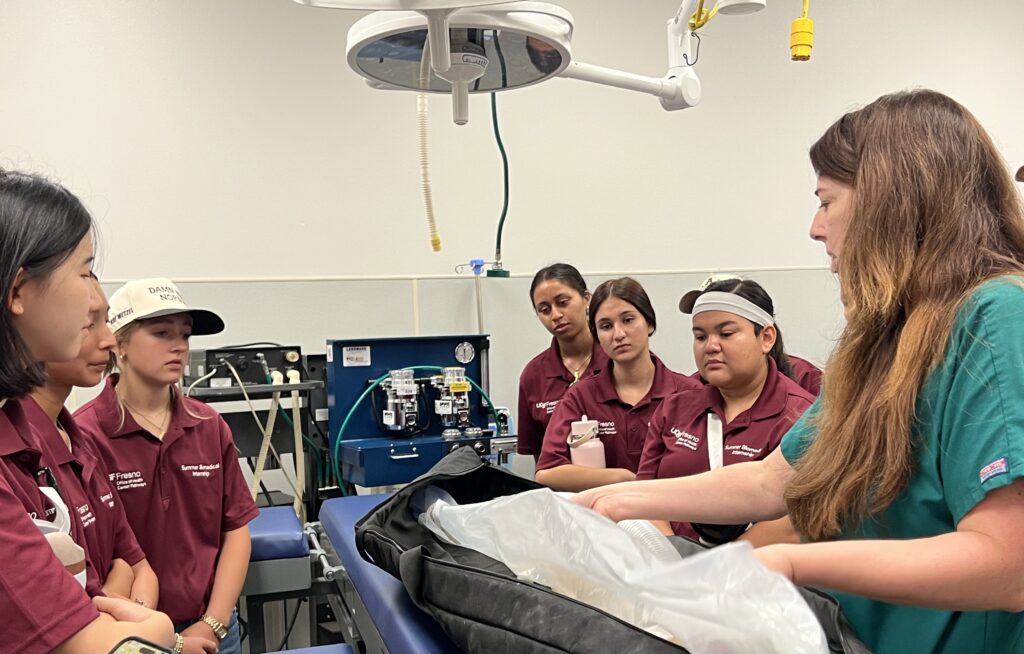
After their healthcare lessons, students transitioned to learning about a different kind of medicine: veterinary medicine. Halvorsen led the students over to the Zoo’s animal hospital where they met with Dr. Audrey Siegrist, the Zoo’s Director of Veterinary Services. Dr. Siegrist showed the students around the hospital and gave them a tour of the equipment used to treat animals of all sizes.
“What we’re doing here is helping create these core memories around how important the medical field is, how important science is, and STEM training for the folks here in the Valley,” said Halvorsen. “These kids are going to remember this for the rest of their lives, being out here at the Zoo, seeing how we do things, and coming to the animal hospital. They’re seeing all the cool things and it’s giving them options for a career as well.”
As the students listened to Dr. Siegrist, they asked thoughtful questions about the differences in human and animal health. One student asked why certain animals could be harder to treat than others, while another asked about potential safety risks when treating animals. Students got the chance to learn about the differences and similarities between animal medicine and human medicine, and potentially even discover opportunities for themselves in the veterinary field.
“Being able to see things is more effective for me, like being able to see the animals while they talk about it,” said Samantha, a student of the program. “Being able to see the instruments that they have makes me realize that it’s not just words in a textbook, but this is real life and this is one of the many options in the healthcare field. You don’t only have to take care of humans, there is also the animal side of it too, which is really cool.”
After their visit to the animal hospital, students walked over to the Zoo’s Reptile House. Built in the 1970s, the Reptile House is a historic exhibit at the Zoo that is home to over 40 species of reptiles. At the time of its completion, Fresno Chaffee Zoo’s Reptile House was the first and only computer-controlled reptile exhibit in the world. Students had the opportunity to see behind the scenes in this innovative, historic exhibit with one of the Zoological Care Specialists that takes care of the animals.
Touring the inside of the exhibit, students talked with the Zoo’s specialist about what the reptiles eat, how they monitor their habitats, and the ways they practice safety procedures with venomous and poisonous animals. Afterwards, they explored the exhibit as guests, but this time with a new perspective on the animals at home there.
“It was really cool seeing the snakes and lizards, and then being able to see the behind the scenes of it too,” said Samantha. “It makes me really appreciative of the work that goes into the Zoo.”
The hands-on experience of coming to the Zoo and interacting with professionals in the field allows these students to gain a further understanding of the many facets of healthcare. They may return to their classrooms with gained knowledge, a new perspective, and potentially even a new career path. Fresno Chaffee Zoo is proud to be a place that fosters connections between people and wildlife.